Ankle joint replacement

Why do you need this operation?

  • Before being offered this operation, you should have tried treatments such as footwear changes, cushioned inserts, braces, anti-inflammatory medications and walking aids. You should also have reduced ‘impact’ activities and, if appropriate, tried to lose weight.
  • This operation is offered to you if you continue to have symptoms despite trying the above measures and lifestyle changes, and after you have been examined and counselled.
  • The operation is usually offered in severe cases of arthritis of the ankle joint.

What does the operation involve?

  • The operation is performed as an inpatient and you will be discharged when mobile and comfortable.
  • The operation is performed with general anaesthetic and nerve block (which means numbing the nerves of the foot and ankle).
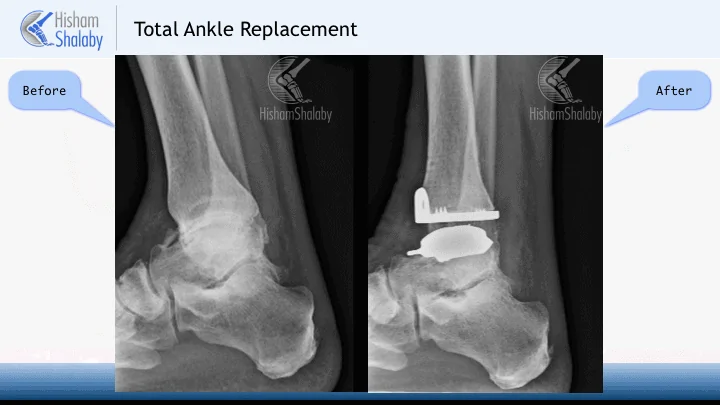
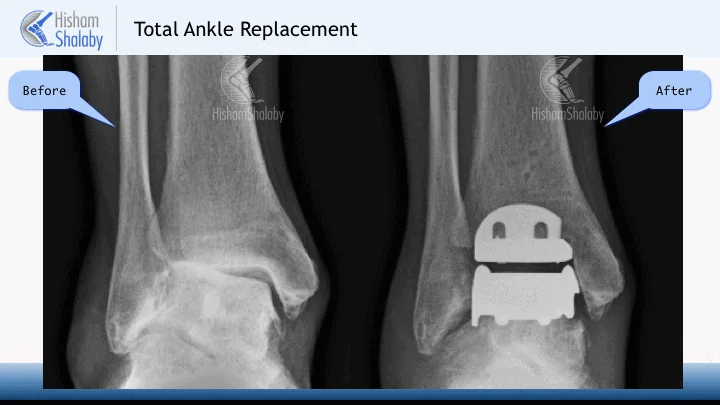
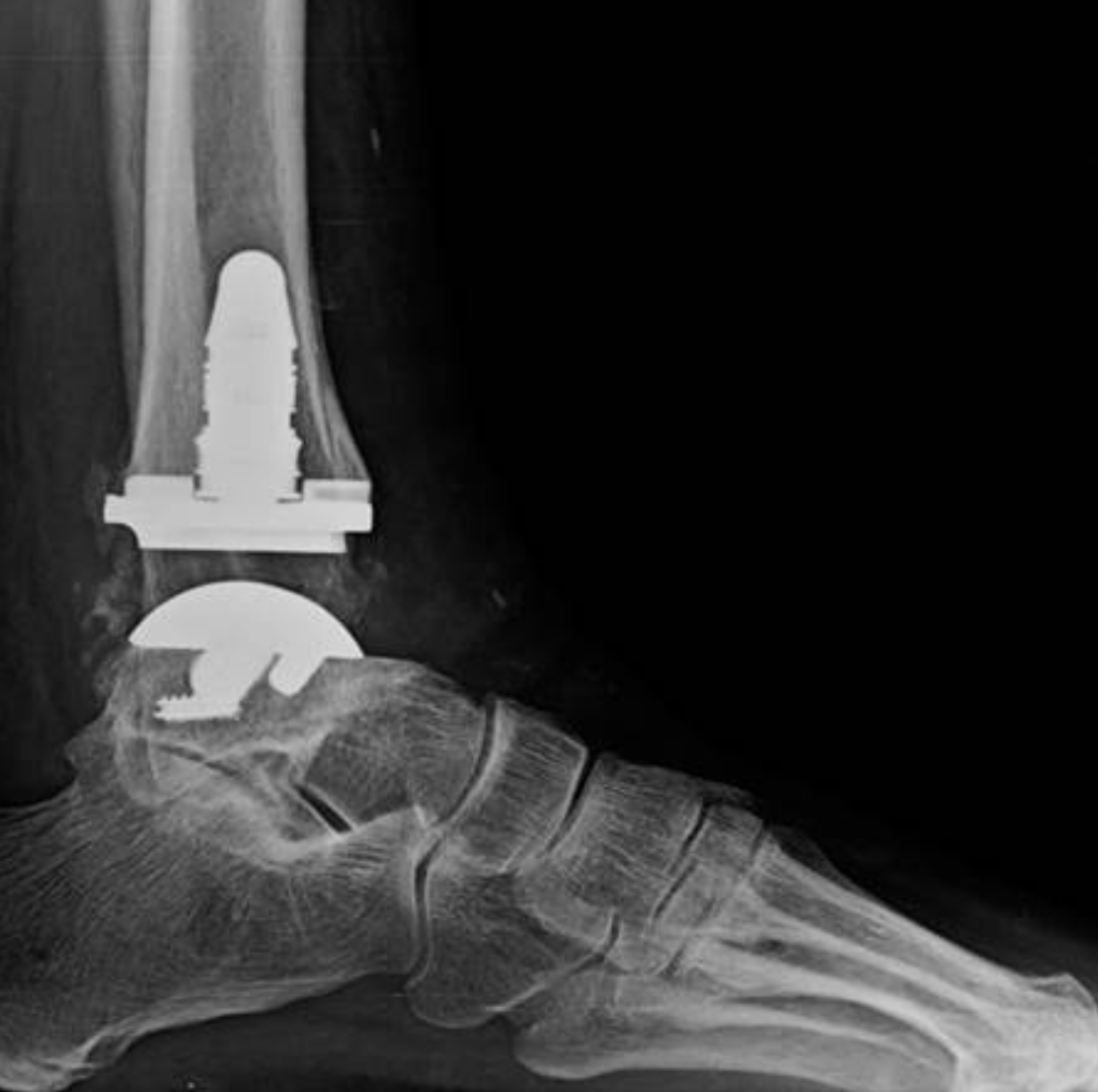
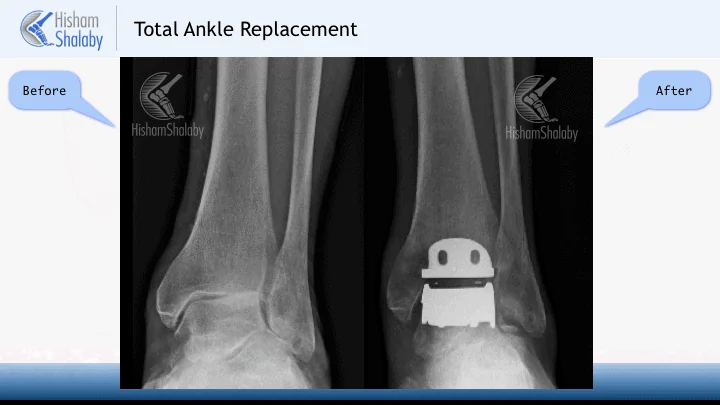
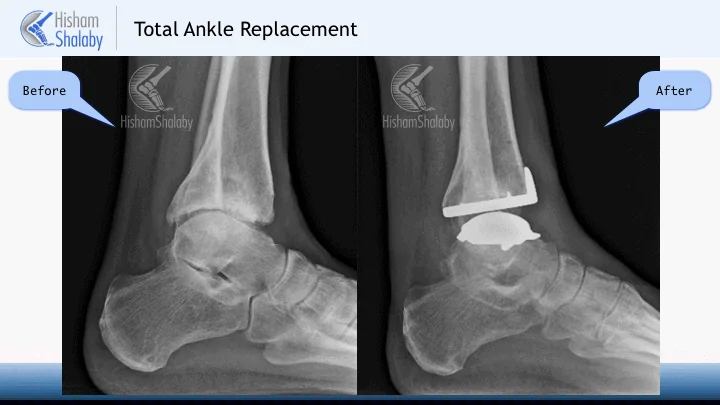
  • The operation involves one incision over the front of the ankle joint. The two sides of the joint are cut and prepared and replaced with metal components. A plastic insert is placed between these two components.
  • Your leg is placed in a boot.

Post-operative period

  • You see the physiotherapist after your operation and they give you crutches
  • Strict elevation for the first two weeks and when necessary afterwards
  • Mobilize with crutches for the first 6 weeks.

Your follow-up

  • At two weeks, the stitches are removed. 
  • At six weeks, the boot is removed and x-rays are obtained. You start putting all your weight through the leg at this stage and you gradually build your activities up.
  • You may need physiotherapy to strengthen your muscles and give you more range of movement.
  • You are followed at 3, 6 and 12 months and annually afterward.
  • Off work for around 4 – 12 weeks, depending on your job
  • No driving for 8 – 12 weeks

Pre-operative Navigation

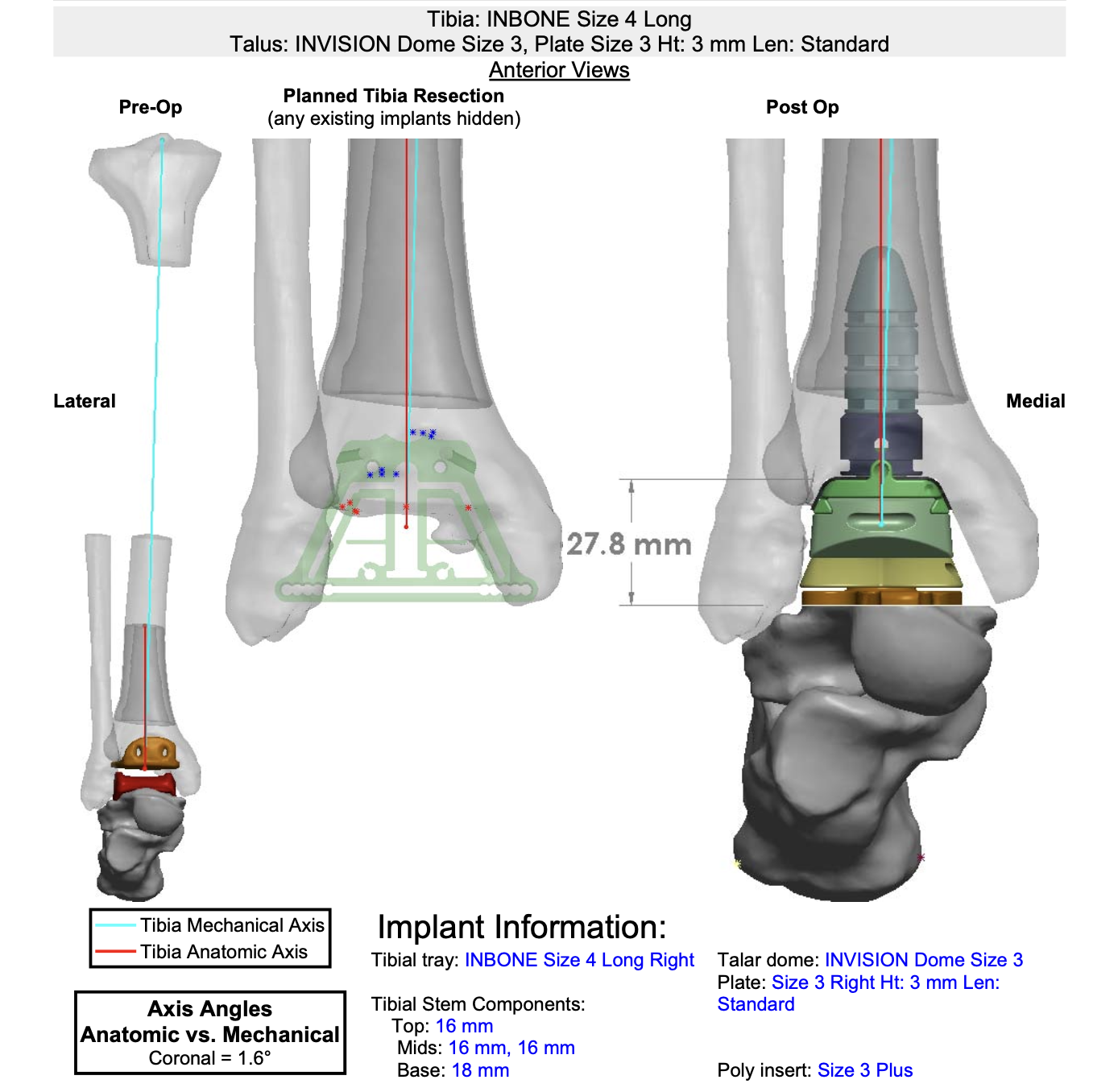
To ensure the best possible results and the highest degree of accuracy in the alignment of the implant, computer preoperative navigation is now done as part of complex cases.

This allow detailed planning of the deformity correction, required position, the appropriate size of the implant and more.

Mr Shalaby, utilise this detailed planning for cases that demands this. 

Prophylaxis against clots

According to the current UK guidelines you could be prescribed blood thinning medication to reduce your risk of getting clots. You will usually be prescribed two tablets of “Aspirin” to take daily (150 mg). In some cases, you will require “Low Molecular Weight Heparin” subcutaneous (under the skin) injections. You will be shown how to self-inject once daily.
What are the possible complications?

  • Infection
  • Ongoing pain
  • Loosening of the joint (happens ultimately at the end of the life span of the joint)
  • Sensitive or painful scars
  • Clots in the leg (DVT)
  • Clots in the lung (PE)
  • Chronic Regional Pain Syndrome
  • After this operation, walking uphill is usually difficult and some patients require shoe-wear modification.


Smoking, diabetes, rheumatoid arthritis, being on steroids or blood thinning medication increases possible risks significantly.

Revision Total Ankle Replacement

Failed Ankle Replacements present with pain of infection following the initial procedure.  This is a complex scenario that demands the highest level of expertise.


The operation usually entail removing the failed implant, obtaining tissue samples to rule out infection, performing a very thorough cleaning and implanting a new prosthesis in the same session or as a staged procedure. Additional procedures like bone grafting, ligament reconstructions, and alignment corrections are frequently needed.  


Mr Shalaby receives tertiary referrals to managed failed ankle replacement cases from across Scotland and has been performing revision ankle replacements for over 15 years.