
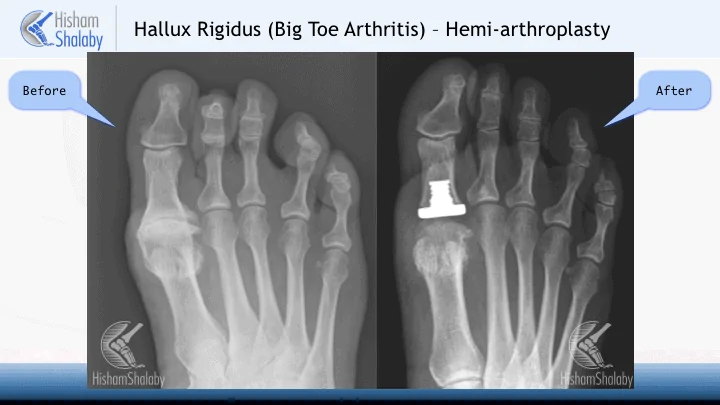
The hemi-arthroplasty means replacement of only half the joint. We are performing more of this procedure now with very good results in selected cases
- enquiries@edinburghorthopaedics.com
- 01312027651
Using guidance of intra-operative x-ray machines and special tools (burrs instead of saw-blades), many traditional foot and ankle procedures can now be performed through smaller incisions. This allows less violation to the soft-tissues and therefore a better preservation of the joint movement and a faster post-operative recovery.
The application of these techniques now involves bunion surgery, big toe arthritis surgery, surgery for the ball of the foot pain, surgery to correct the bunionette deformity and many more.

Smoking, diabetes, rheumatoid arthritis or being on steroids or blood-thinning medication increases possible risks significantly.

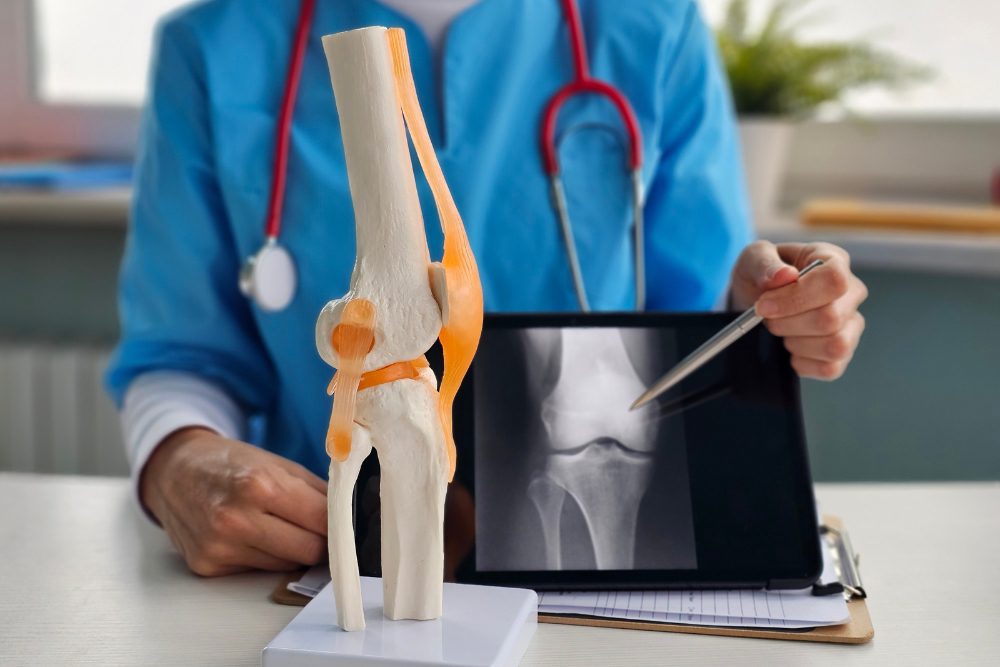
The gold standard treatment of the advanced wear and tear in the big toe joint remains the fusion. However, the fusion causes loss of the movement completely and can leave the patient with some limitations. The recovery after the fusion also usually takes a bit longer as we wait for the 2 sides of the joint to heal together.
The replacement was therefore thought of as an alternative is selected cases. The full replacement of the joint has yielded discouraging results in the literature. It also entails resection of a lot of bone and therefore makes any future surgery in this area more difficult.
The hemi-arthroplasty means replacement of only half the joint. We are performing more of this procedure now with very good results in selected cases
Mr Shalaby
Typically replies within minutes
Any questions related to Consultant Foot & Ankle Surgeon?
WhatsApp Us
Online | Privacy policy
WhatsApp us